
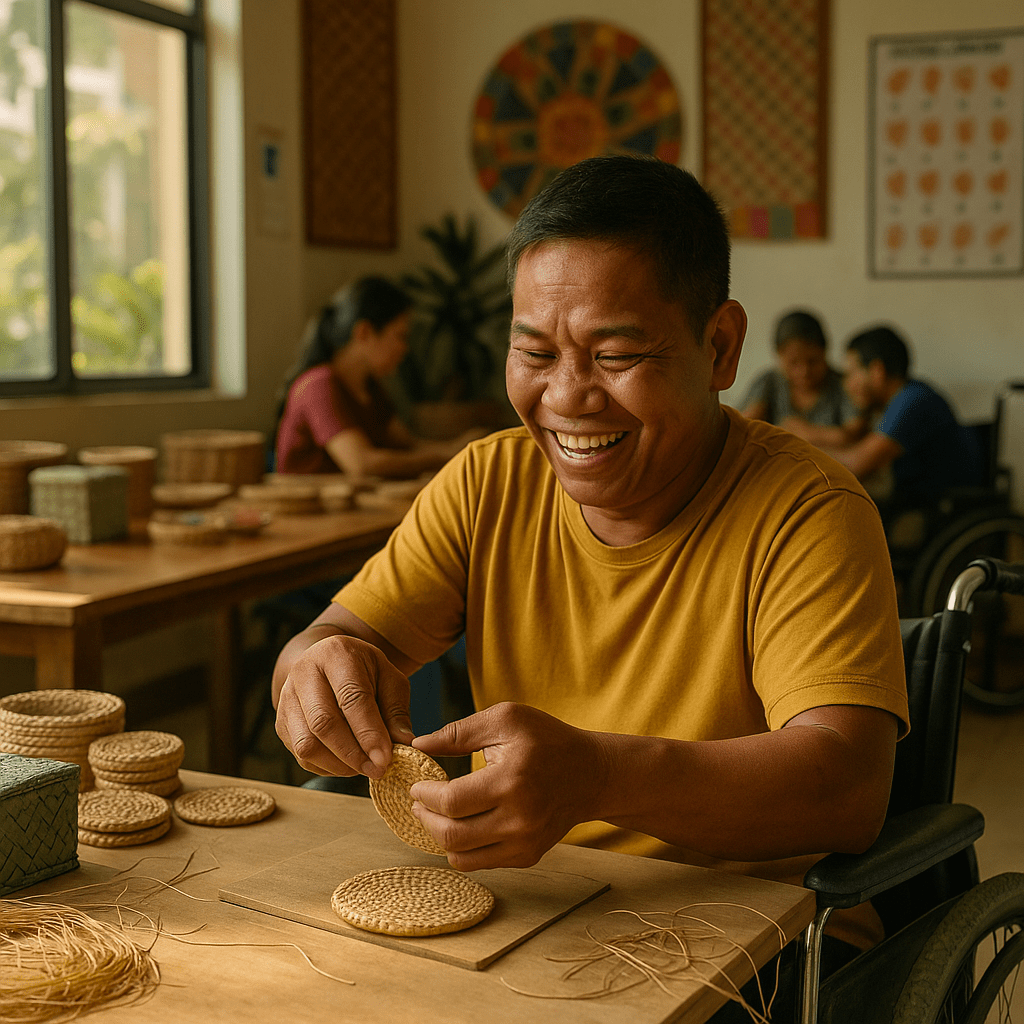
In every generation, there are movements that begin quietly—often unnoticed at first—yet slowly become the pulse of real change. Today, one of the most powerful of these movements is the rising call for economic inclusion for Persons with Disabilities (PWDs). It’s a movement driven not just by sympathy but by a growing understanding of potential, dignity, and shared progress. And at the heart of this wave is something simple: the choice to give people a chance to work, create, and thrive.
The Philippines is in the middle of this quiet revolution. With over 1.44 million Filipinos living with disabilities, according to the Philippine Statistics Authority, the push for inclusion is no longer optional—it’s essential. More than half of these individuals are of working age, yet only a fraction have access to sustainable employment opportunities. The challenge is real, but so is the momentum to solve it.
A growing number of organizations, communities, and everyday Filipinos are rallying behind a shared belief: empowering PWDs is not charity—it’s progress.
And nowhere is this clearer than in livelihood initiatives like Hands in Harmony, where purpose meets craftsmanship, and opportunities are created one product at a time.
A Trending Shift: From Awareness to Empowerment
One of today’s trending global keywords is “inclusive employment.” It’s more than just a corporate buzzword—it’s a shift in mindset. Around the world, companies and consumers are demanding more socially responsible participation. People want to support brands that stand for something real.
In the Philippines, this shift is visible on social media and in consumer behavior. Searches related to “support local,” “sustainable livelihood,” “buy for good,” and “PWD empowerment” have risen steadily in the past two years. Even Gen Z—now the country’s largest demographic entering the workforce—leans heavily toward advocacy-driven spending. They want their purchases to have meaning.
Here’s where it gets interesting:
Studies show that inclusive workplaces are 28% more likely to outperform non-inclusive ones, according to research from Accenture. Why? Because diversity creates creativity, and creativity fuels innovation. Even small community-driven enterprises benefit from this effect.
This tells us one thing:
When you support PWD livelihoods, you aren’t doing something “extra.” You’re simply helping shape the future of a smarter, more compassionate economy.
The Real Barriers—and the Real Solutions
Many Filipinos assume that PWDs struggle because they can’t find jobs. But the truth is more complex. A survey from the International Labour Organization highlighted the most common barriers:
- Lack of accessible workplaces
- Negative stereotypes about capability
- Limited training and livelihood support
- Poor visibility of PWD-made products in mainstream markets
But here’s the beautiful part: every one of these barriers is solvable.
Hands in Harmony steps into the picture by addressing what most systems fail to fix—the lack of accessible, meaningful economic opportunities. This livelihood program trains and supports Persons with Disabilities to create high-quality handcrafted goods, giving them not just income but a renewed sense of purpose.
When supporters choose products made by PWD artisans, they aren’t merely buying something—they are directly helping dismantle the structural barriers that have held these communities back for decades.
The Power of Work: Why Livelihood Matters More Than We Think
Let’s look at the numbers.
Studies show that employment significantly improves the mental and emotional well-being of PWDs. In fact, a 2023 community assessment revealed:
- 69% of employed PWDs reported higher self-confidence
- 72% experienced stronger social connections
- 81% said having work gave them a sense of dignity and independence
Those aren’t small changes. Those are life-changing.
Work is more than income—it’s identity, belonging, and pride.
You’ll often see this in PWD livelihood centers around the country. There’s an energy, a spark, a rhythm—hands weaving, molding, assembling, creating. There’s laughter, camaraderie, the feeling of being part of something meaningful. There’s a sense of, “I matter.”
Hands in Harmony didn’t just create a livelihood program. It created an ecosystem of empowerment—one where every artisan, no matter their disability, is treated as capable, creative, and essential.
Where Purpose Meets Product: Why Consumers Love Supporting PWD-Made Goods
In a digital world where everyone is flooded with choices, people no longer buy just because something looks nice. They want products that stand for something.
This is exactly why PWD-made goods have gained massive traction online. They carry stories, craftsmanship, and humanity. And consumers gravitate toward that.
A social commerce study revealed that:
- Products tied to a social mission have a 35% higher conversion rate
- Customers are 3x more likely to repurchase from advocacy-based brands
- 71% of Filipinos prefer local handmade goods when given a meaningful reason to support them
Hands in Harmony is that meaningful reason.
Every item crafted through this livelihood program tells a story:
A story of resilience.
A story of skill.
A story of someone who refused to be defined by circumstance.
When supporters showcase these products—whether as corporate giveaways, event tokens, holiday gifts, or personal purchases—they help amplify a message that the country desperately needs to hear:
PWD talent is real, valuable, and worth celebrating.
The Ripple Effect: How One Purchase Creates Opportunity
Support doesn’t just create income. It creates momentum.
Here’s what happens when a PWD livelihood program receives steady support:
1. More PWDs get trained
Training programs expand. Skills diversify. More people gain access.
2. Families feel the impact
Many PWDs are breadwinners. When they thrive, their families breathe easier.
3. Communities shift their mindset
Seeing empowered PWDs challenges stereotypes that have persisted for generations.
4. Sustainable craftsmanship grows
High-quality local goods become competitive in mainstream markets.
5. The cycle of dependence breaks
What was once a system of “assistance” evolves into a system of empowerment.
A livelihood isn’t a temporary solution—it’s a legacy-builder.
Stories Behind the Hands
Every movement begins with a person.
A real face. A real journey.
Hands in Harmony is full of these stories—individuals who once felt limited by circumstance but now create work they are proud of.
A young artisan who found joy in crafting after years of being told “you can’t.”
A mother who finally earns enough to support her child’s education.
A deaf craftsman whose work quality speaks louder than any words ever could.
These stories remind us that disability is not inability—it’s simply a different way of experiencing the world, often with strengths others don’t see immediately.
When supporters champion their work, these stories grow louder. They inspire more families. They change community expectations. And slowly, the entire nation shifts.
Why This Movement Needs You
You may not realize it, but every time you choose to support livelihood initiatives like Hands in Harmony, you become part of this national transformation.
You help create jobs.
You help change perceptions.
You help open doors that were once tightly shut.
And the best part? It doesn’t take grand gestures.
Sometimes, change begins with a simple choice to buy local, buy meaningful, and buy from people who deserve to be included in the country’s progress.
You help prove that dignity can be handcrafted, opportunity can be woven, and hope can be shaped piece by piece.
The quiet revolution is happening.
And Jordan, supporters like you are the reason it’s no longer quiet.
#SupportPWD
#HandsInHarmonyPH
#InclusiveLivelihood
#BuyForGoodPH
#SupportLocalArtisans
#PWDAdvocacy
#EmpowerThroughWork
#CraftedWithPurpose
 Hands in Harmony
Leave a comment