
Most people want to help.
That’s the truth.
You see a post about Persons with Disabilities. You feel something. You share it. Sometimes you donate. Sometimes you join a cause when you can. And for a moment, it feels right.
But if you’re honest, there’s also a quiet question that lingers:
Is this really changing anything?
Because a week later, the story is gone from your feed. The need is still there. And the people you wanted to help are still waiting for the next wave of support.
This is the uncomfortable part of social causes that many supporters don’t talk about.
Not because they don’t care—but because they care deeply and don’t want to get it wrong.
Why Many Good Intentions Still Leave People Stuck
In the Philippines, there are over 1.4 million Persons with Disabilities. Many of them are talented, creative, and capable of meaningful work. Yet only a small percentage have stable livelihood opportunities.
Not because they lack ability.
But because help often comes in forms that are temporary.
Relief goods are consumed.
Donations are spent.
Outreach programs end.
And then life quietly returns to the same question for many PWDs:
“What now?”
Support that stops short of livelihood can unintentionally leave people dependent—always waiting for the next round of help, instead of building something of their own.
That’s not anyone’s intention.
But intention alone doesn’t change outcomes.
The Quiet Solution Most Supporters Don’t Realize They’re Missing
There’s another way to help—one that doesn’t require big donations, long commitments, or special access.
It’s simpler than most people expect.
Support work. Not just need.
When you buy from PWD artisans or social enterprises, something powerful happens:
You’re not giving money to someone.
You’re paying for something they created.
That difference matters.
Work does more than provide income. It restores dignity, confidence, and identity. It allows people to contribute to their families instead of feeling like a burden. It gives structure to days, purpose to effort, and pride in results.
This is where livelihood programs—like those behind Hands in Harmony—quietly change lives.
A Story That Happens Every Day (But Rarely Makes Headlines)
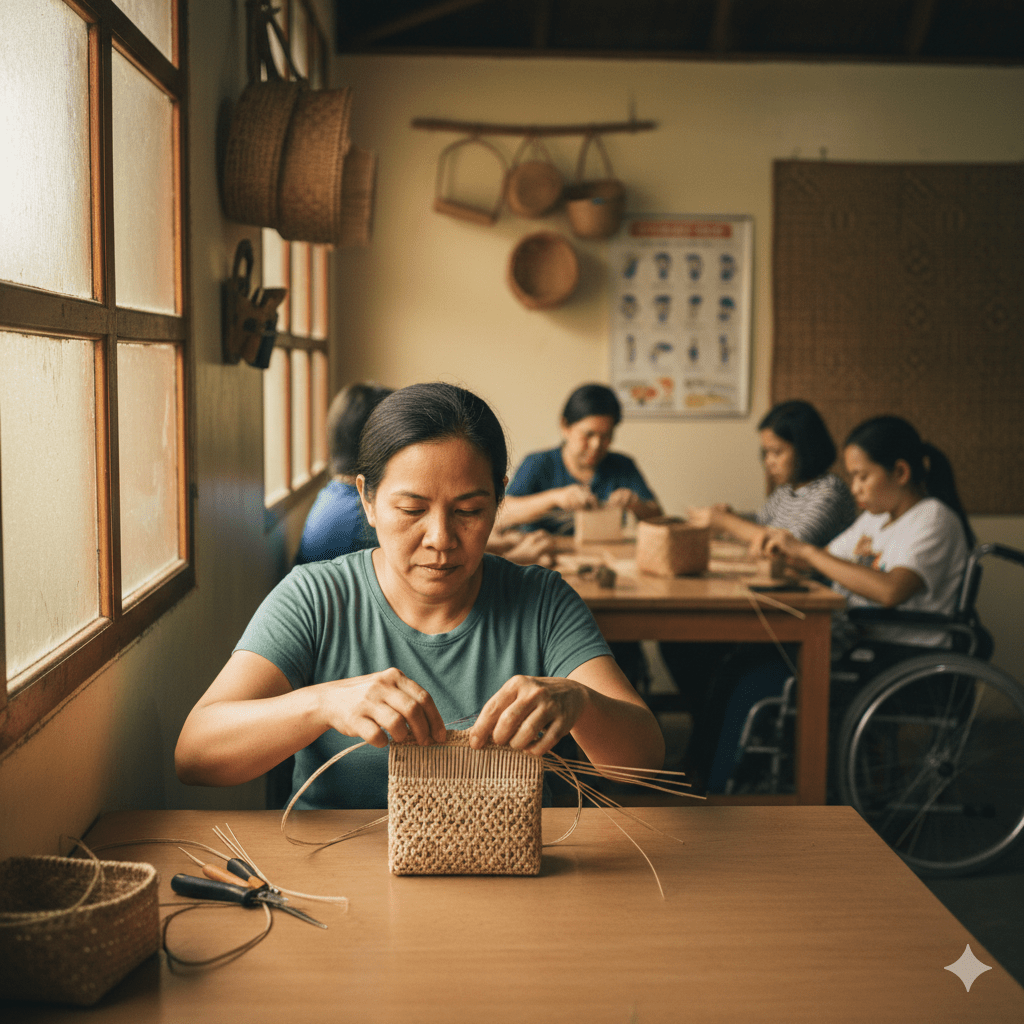
Inside a small livelihood space, a PWD artisan arrives early. The room is simple. The tools are modest. But the focus is real.
Hands work carefully. Finished products are lined up neatly. Each piece represents hours of effort and years of patience.
This isn’t a charity activity.
It’s a job.
The income earned helps pay for food, transportation, medicine, or school expenses. More importantly, it changes how that person sees themselves.
Not as someone being helped.
But as someone contributing.
And that shift is everything.
What Happens When People Are Given the Chance to Earn
When PWDs have access to livelihood:
- Confidence grows
- Mental well-being improves
- Families become more stable
- Social isolation decreases
- Dependence on aid slowly fades
Studies consistently show that people with disabilities who engage in meaningful work report higher self-esteem and better quality of life than those who rely solely on assistance.
The outcome isn’t just financial.
It’s deeply human.
Why Your Choices Matter More Than You Think
Many supporters believe helping requires big actions.
In reality, change often begins with small, consistent choices.
Choosing to buy a product made by a PWD artisan.
Choosing a gift with a story behind it.
Choosing to support social businesses instead of mass-produced alternatives.
These choices may feel small—but they create demand.
And demand creates opportunity.
When people buy from social enterprises, they help sustain livelihoods. When livelihoods are sustained, more people can be trained, more families supported, and more dignity restored.
This is how support becomes sustainable.
The Outcome: Help That Doesn’t Expire
Unlike donations that are used once, livelihood support keeps working.
A purchase today leads to:
- More work tomorrow
- More confidence next month
- More independence next year
It allows PWDs to plan, dream, and participate fully in their communities.
And for supporters, it offers something many have been searching for:
A way to help that feels honest, respectful, and lasting.
A Subtle but Important Invitation
If you care about Persons with Disabilities…
If you believe people deserve dignity, not dependency…
If you want your support to last longer than a moment…
Consider where you choose to spend.
Look for products made by PWDs.
Support social enterprises.
Choose causes that create work, not waiting.
You don’t need to save anyone.
You just need to support the chance for people to stand on their own.
And sometimes, that starts with something as simple—and as powerful—as choosing what you buy.
 Hands in Harmony
Leave a comment